
Your commercial building is the face of your business. A fresh coat of paint can transform your property, attract customers, and boost tenant satisfaction. But when the job goes wrong, you're left with peeling paint, frustrated tenants, and a hefty bill for rework.
Palm City business owners and property managers often make the same preventable mistakes when tackling commercial painting projects. The good news? You can avoid these pitfalls entirely with the right knowledge and planning.
Here are the seven most common commercial painting mistakes we see: and exactly how to fix them.
Mistake #1: Rushing or Skipping Surface Preparation
You've probably heard the saying: 90% of a quality paint job happens before the first brush stroke. It's true.
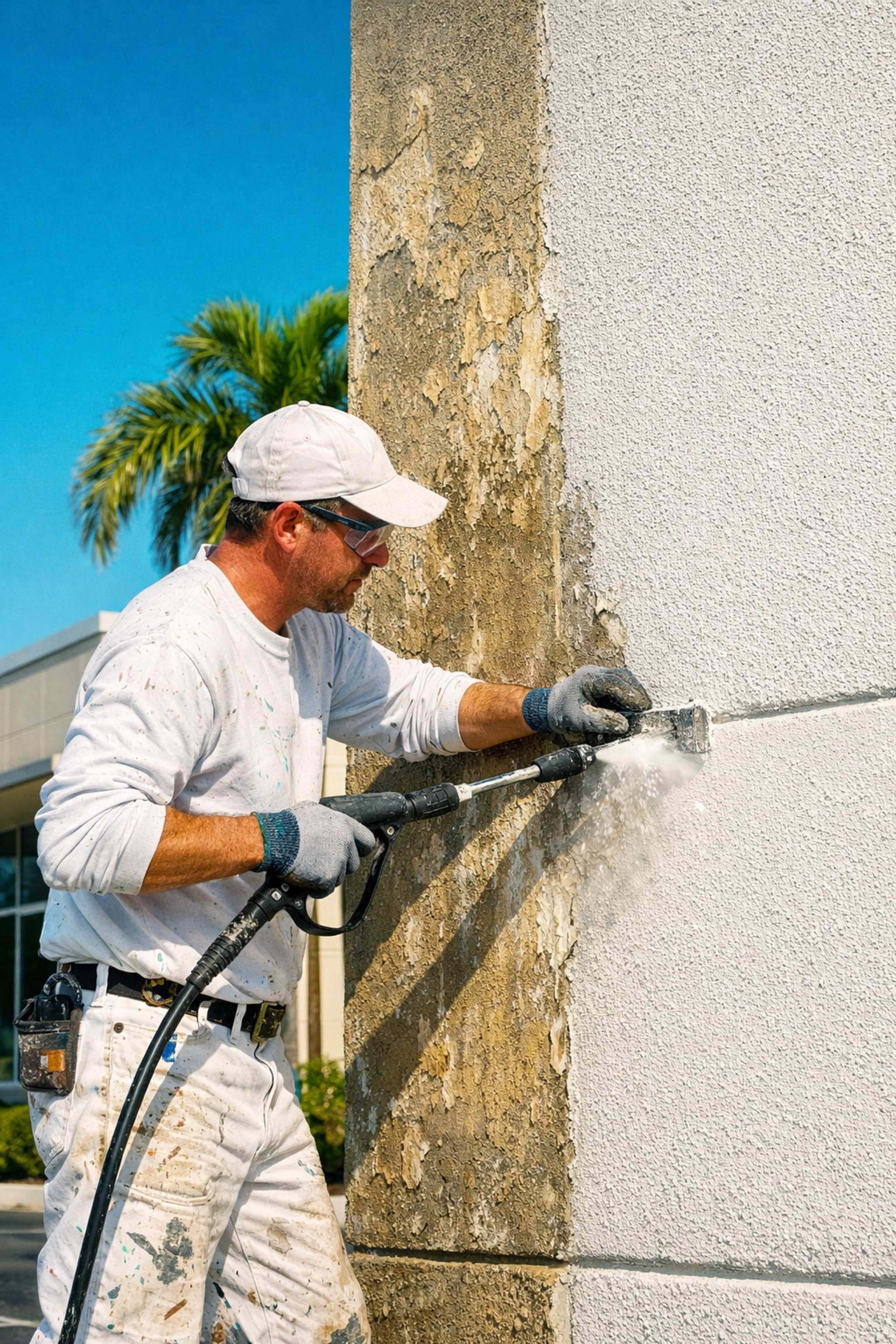
Many contractors cut corners on prep work to save time and underbid competitors. They'll paint right over dirty walls, chalky residue, or peeling surfaces. The result? Your new paint bubbles, cracks, and fails within months instead of lasting for years.
The Fix: Proper surface preparation isn't optional: it's the foundation of durability. Your contractor should pressure wash exterior surfaces to remove dirt and mildew, scrape away loose or peeling paint, sand rough areas smooth, fill cracks and holes with quality filler, and apply primer to bare surfaces.
This prep work takes time and costs money upfront. But it's the difference between a paint job that lasts two years and one that lasts ten.
Mistake #2: Choosing the Wrong Paint Type for Florida's Climate
Not all paint is created equal. What works in Colorado will fail spectacularly in Palm City.
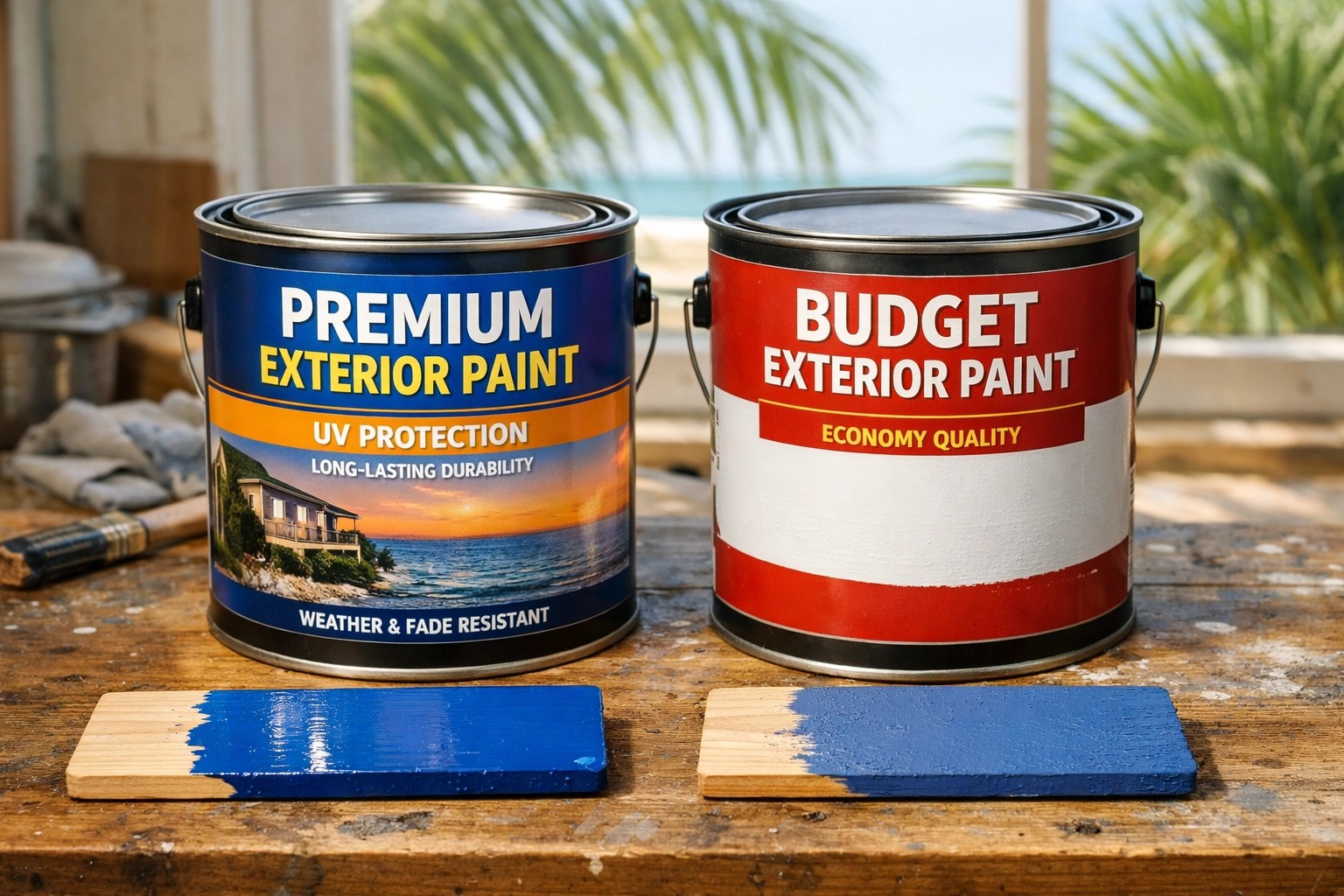
Florida's brutal sun, salt air, intense humidity, and daily temperature swings demand specialized paint formulations. Standard or budget-grade paint simply can't withstand these conditions. You'll see fading within a year, chalking that leaves residue on your hands, bubbling from trapped moisture, and premature peeling on south-facing walls.
The Fix: Specify high-quality paint formulated for Florida's coastal climate. Look for products with UV inhibitors to prevent fading, mildew-resistant additives for humidity, and flexibility to handle temperature changes without cracking.
Professional commercial painters in Port St Lucie understand these requirements. They'll recommend the right products for your building's specific exposure: whether you're dealing with full sun, salt spray near the coast, or high-traffic areas that need extra durability.
Don't let a contractor talk you into "standard" paint to save a few hundred dollars. The wrong product will cost you thousands in early repainting.
Mistake #3: Poor Scheduling and Communication with Tenants
Nothing frustrates commercial tenants faster than surprise painting projects that block their entrances, fill their spaces with fumes, or prevent customer access during business hours.
We've seen property managers lose good tenants over poor communication. When tenants aren't notified properly, they can't warn their customers, adjust their schedules, or protect sensitive inventory and equipment.
The Fix: Communication starts early. Notify all tenants at least two weeks before work begins. Provide specific dates, times, and which areas will be affected. Share your contractor's schedule so businesses can plan around disruptions.
Consider off-hours painting for high-traffic areas. Evening or weekend work costs slightly more, but it prevents revenue loss for your tenants. That's a trade-off most property managers are happy to make.
Create a point of contact for questions and concerns. When tenants know who to call if issues arise, small problems get resolved before they become big complaints.
Mistake #4: Ignoring Safety Compliance and Licensing
Here's a scary thought: if an unlicensed, uninsured contractor's worker gets hurt on your property, you could be held liable.
Some property managers don't verify insurance and licensing before hiring. They assume all contractors are properly covered. That assumption can result in devastating financial consequences if something goes wrong.
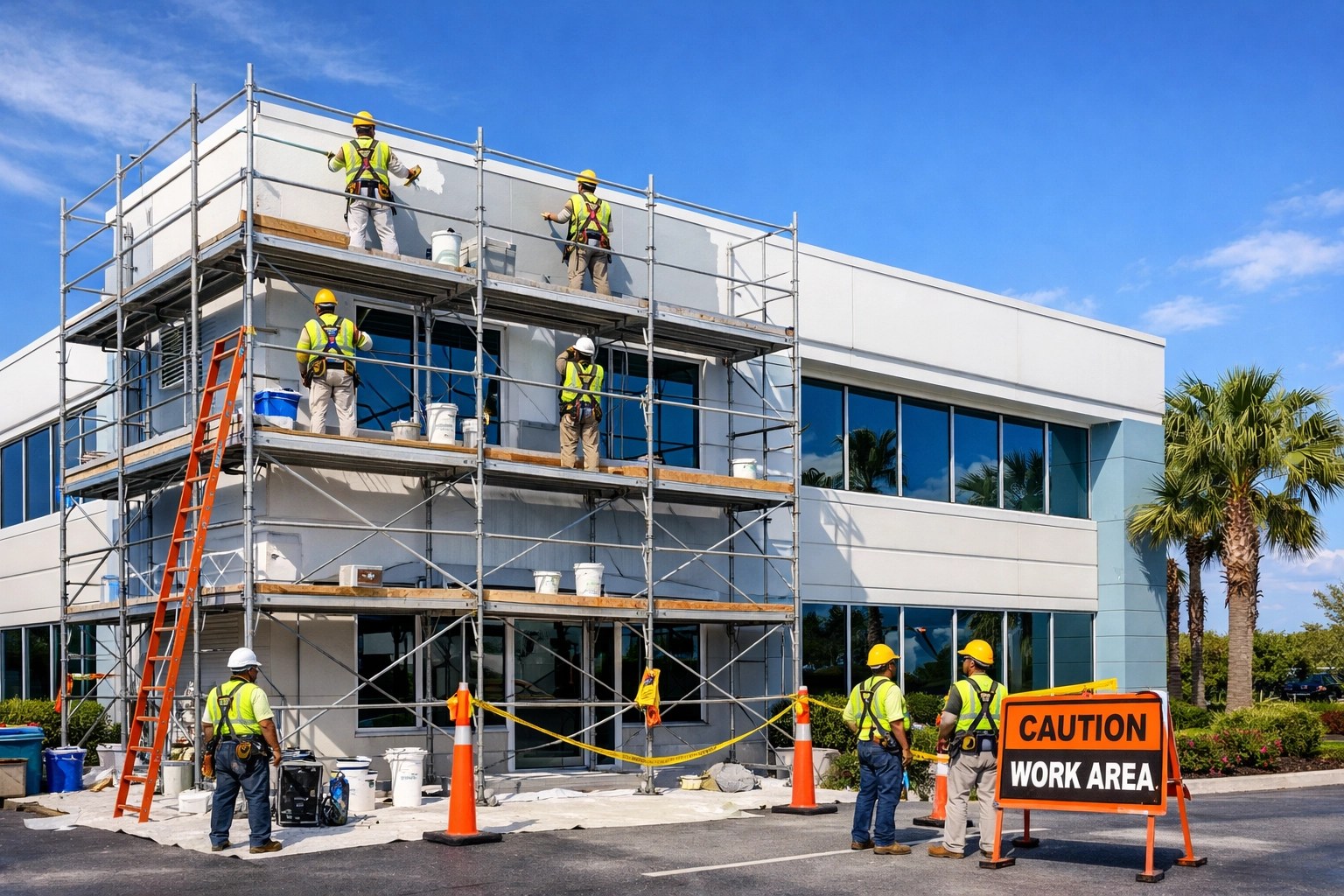
The Fix: Always verify credentials before signing any contract. Request proof of current general liability insurance, workers' compensation coverage, and state contractor licensing. Check that the license number is active and in good standing.
Ask about OSHA training and safety protocols. Professional commercial painting contractors have certified procedures for lift operation, fall protection, and jobsite safety. They conduct regular safety meetings and use proper protective equipment.
These aren't just checkboxes: they're protections for your property and your peace of mind.
Mistake #5: Hiring Based Only on Price
The lowest bid is rarely the best value.
Budget contractors stay cheap by cutting corners you won't notice until it's too late. They use the cheapest paint available, skip essential prep steps, send inexperienced crews, and rush through the work to move onto the next job.
Six months later, you're looking at premature failure and calling another contractor to fix the mess. That "bargain" just became the most expensive option.
The Fix: Request detailed scopes of work from at least three contractors. Compare what's included, not just the bottom-line price. Look for specifics on surface preparation, how many coats will be applied, the brand and grade of paint, project timeline with milestones, and warranty terms.
Check references from similar commercial projects. Talk to property managers who've used the contractor. Ask about communication, professionalism, and how the paint has held up over time.
The goal isn't finding the cheapest bid: it's finding the best value for long-term durability and minimal hassle.

Mistake #6: Using In-House Staff or Inexperienced Contractors
Some property managers assign painting to maintenance staff or handymen to save money. The intention makes sense, but the results rarely do.
Commercial painting requires specialized knowledge and equipment. Color matching across large surfaces, proper spray application, working safely at height, understanding how different substrates require different treatments: these skills take years to develop.
When inexperienced people handle painting, projects drag on for weeks, finishes look uneven and unprofessional, and the paint fails early from improper application.
The Fix: Hire professional commercial painters who specialize in business properties. They have industrial-grade equipment that produces superior finishes faster, proven processes for minimal disruption, experience with complex projects like multi-story buildings, and the workforce to complete jobs efficiently.
Your maintenance staff can focus on what they do best: daily upkeep and emergency repairs. Leave the painting to specialists who do it right the first time.
Mistake #7: Compressing the Timeline
Every property manager wants their building painted quickly. But rushing creates problems that undermine the entire investment.
When contractors compress schedules, they skip drying time between coats, miss spots in their hurry, apply paint in poor weather conditions, and don't allow adequate cure time before reopening areas.
The paint may look fine initially, but within months you'll see peeling at corners and edges, uneven sheen and color, poor adhesion that bubbles or cracks, and significantly shortened lifespan.
The Fix: Allow adequate time for proper execution. Quality painting happens in distinct phases that can't be rushed.
Surface preparation typically takes 30-40% of the total project time. Primer and paint each need proper drying time: usually 24 hours between coats in Florida's humidity. Final curing takes several days before surfaces can withstand normal wear.
A realistic timeline produces superior results that last. Discuss scheduling with your contractor upfront. If you have a firm deadline, work backward to determine when the project must start.
Getting Commercial Painting Right in Palm City
Your commercial property deserves more than a quick paint job that fails within a year. By avoiding these seven common mistakes, you'll protect your investment and create a professional appearance that lasts.
The right approach combines thorough surface preparation, climate-appropriate materials, clear communication, proper credentials and safety compliance, value-focused contractor selection, professional expertise, and realistic scheduling.
When you need commercial painters in Port St Lucie who understand these principles, look for contractors with proven experience on properties like yours. Ask the right questions, verify credentials, and prioritize long-term value over short-term savings.
Your tenants, customers, and bottom line will thank you for taking the time to do it right.
Leave a Reply