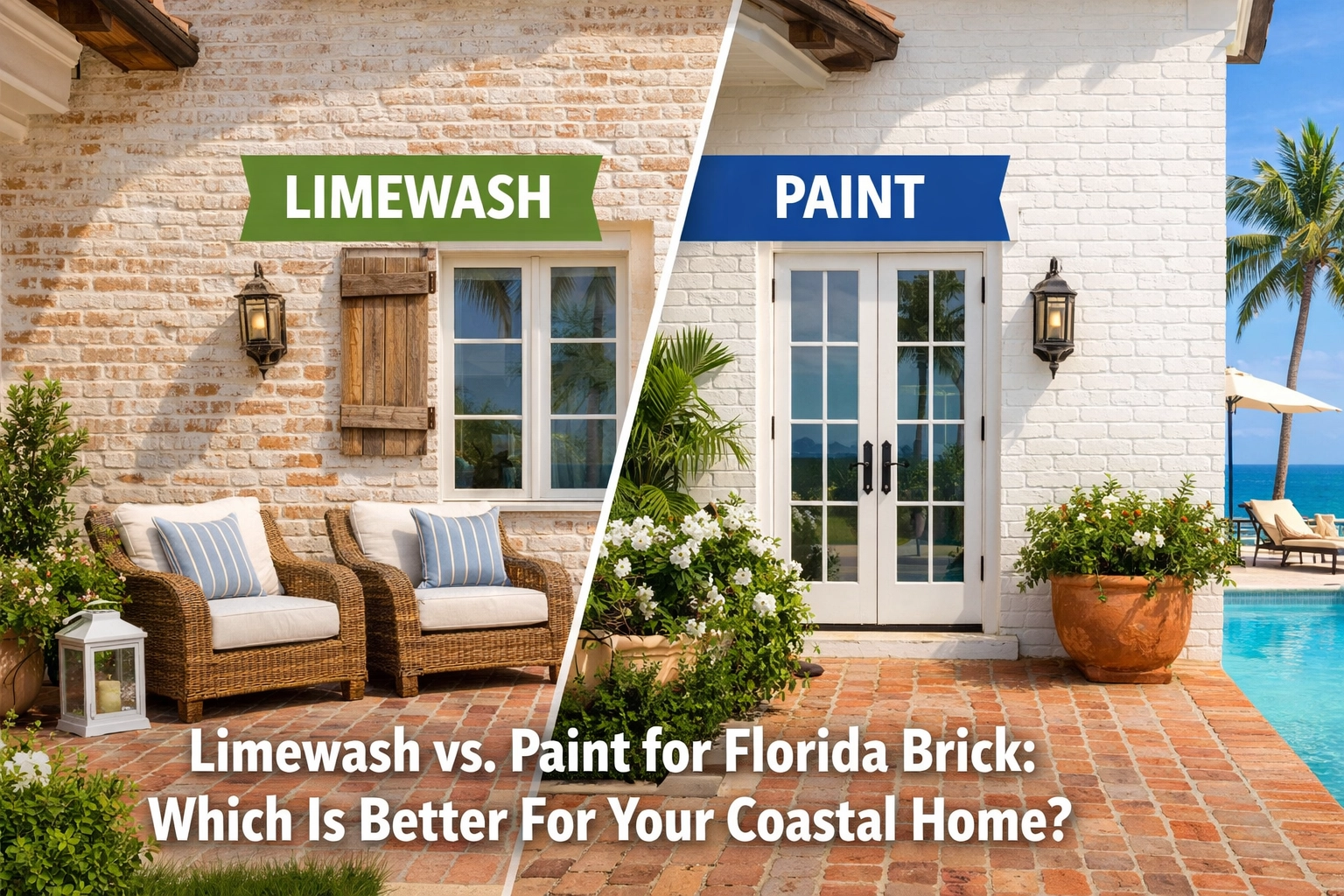
You've got a gorgeous brick home in Stuart or Palm City, but those red or orange bricks don't quite match your coastal aesthetic anymore. You want something lighter, brighter, something that feels more "beachy" without looking like every other house on the block.
So you start Googling. And suddenly, you're staring at two very different options: limewash or exterior paint. One sounds rustic and old-world. The other sounds… well, like regular paint. But here in coastal Florida, this decision matters more than you think.
Let's break down the real differences so you can pick the right one for your home without regretting it three years from now when the humidity does its thing.
What Exactly Is Limewash? (And How Is It Different From Paint?)
Limewash isn't paint. Let's get that straight right away.
Limewash is made from crushed limestone mixed with water. It's been used for centuries on European villas and Mediterranean cottages. When you apply it to brick, it soaks into the surface rather than sitting on top like a coat. Think of it like a stain for brick: it becomes part of the material instead of forming a film over it.
Exterior paint, on the other hand, is exactly what it sounds like. It's a pigmented coating (usually acrylic or latex-based for masonry) that sits on top of the brick and creates a sealed, uniform layer. High-end masonry paints are designed to flex with temperature changes and resist mildew, but they still work as a barrier between your brick and the outside world.
The key difference? Breathability. And in Florida, that's a game-changer.
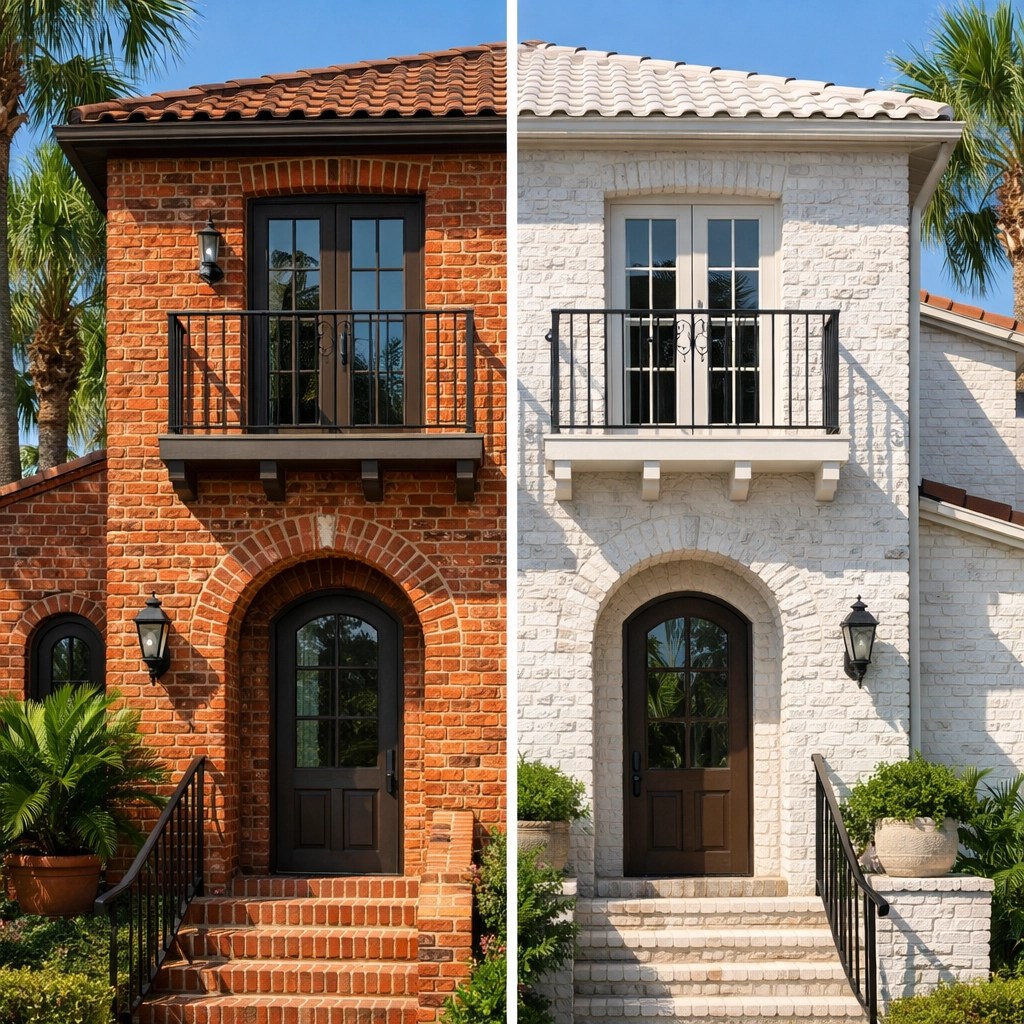
Why Breathability Matters in Coastal Florida
Here's the thing about living near the water in Port St. Lucie, Stuart, or Palm City: your home is constantly battling moisture. Humidity hangs in the air like a wet blanket. Salt spray drifts in from the coast. Afternoon thunderstorms dump rain on your walls, and then the sun bakes it all the next day.
Traditional exterior paint creates a waterproof seal over your brick. Sounds good, right? Except when moisture gets trapped behind that seal: and it will: it has nowhere to go. It sits inside the brick, creating the perfect environment for mold, mildew, and eventually, peeling paint.
Limewash brick florida homes have a major advantage here. Limewash is naturally porous. It lets moisture vapor escape from the brick while still protecting the surface. Your walls can literally breathe. This prevents that trapped-water problem and keeps mildew at bay without needing a ton of chemical additives.
In Florida's humid climate, this breathability isn't just a nice feature: it's the reason limewash has been making a comeback in coastal communities.
The "Chalking" Look: Character or Problem?
One of the most common questions we get at CertaPro Painters of Port St. Lucie is: "Why does limewash look so… uneven?"
That's the chalking effect, and it's 100% intentional.
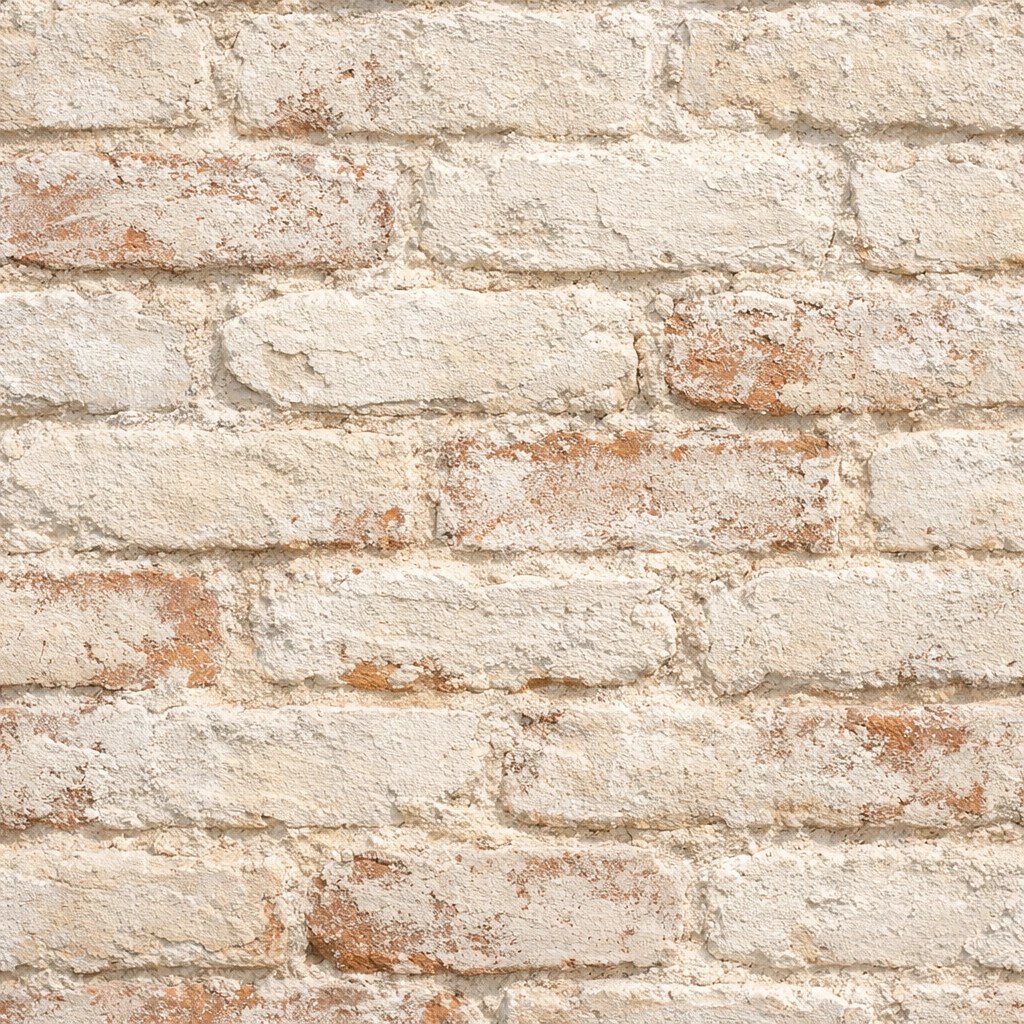
Limewash ages naturally. Over time, the finish develops a soft, matte patina with subtle variations in tone. Some areas might look slightly lighter. The texture shows through. It's not perfectly uniform: and that's the whole point. It creates that Old-World European or rustic farmhouse vibe that's all over Pinterest right now.
If you love the idea of a home that looks like it's been there for decades (even if you just painted it last year), limewash delivers that effortlessly. In neighborhoods like Stuart with historic coastal homes, this weathered look blends beautifully with the laid-back beach town aesthetic.
But let's be honest: if you prefer a crisp, uniform finish that looks freshly painted for years, paint is your friend. High-quality masonry paint gives you that smooth, consistent color that stays put without the natural aging that limewash develops.
Mildew Resistance: The Florida Humidity Test
Both options can handle mildew, but they do it differently.
Limewash is naturally alkaline, which means it resists mold and mildew growth on its own. No fungicides needed. Plus, because it breathes, moisture doesn't get trapped underneath to feed mildew in the first place. You might see some light surface growth after a particularly wet season, but a quick spray-down usually takes care of it.
High-end masonry paint fights mildew with added chemical inhibitors. These paints are formulated specifically for humid climates and do a solid job keeping growth at bay. The downside? If moisture does get trapped behind the paint film (and in Florida, it eventually will), you could end up with bigger problems down the road: bubbling, peeling, or mildew growing under the paint where you can't even see it.
For exterior painting port st lucie projects near the coast, we always recommend breathable options when possible. Your home will thank you.
Durability and Maintenance: What's the Real Story?
Here's where things get interesting.
Limewash lasts about 5–7 years in high-exposure coastal areas, though some applications can stretch to 8–12 years depending on how sheltered your walls are. The finish fades gradually and gracefully: no dramatic peeling or chipping. When it's time to refresh, you just apply another coat. No scraping, no sanding. Easy.
Paint typically lasts 5–10 years, but it requires more intensive maintenance. You'll need to watch for peeling, especially around windows and trim. When it's time to repaint, you're looking at surface prep, possibly scraping old paint, priming, and then two coats. It's a bigger production.
The irony? Limewash looks like it's aging, even when it's perfectly fine. Paint looks perfect until suddenly it's peeling in sheets.
Cost: The Real Bottom Line
Let's talk money.
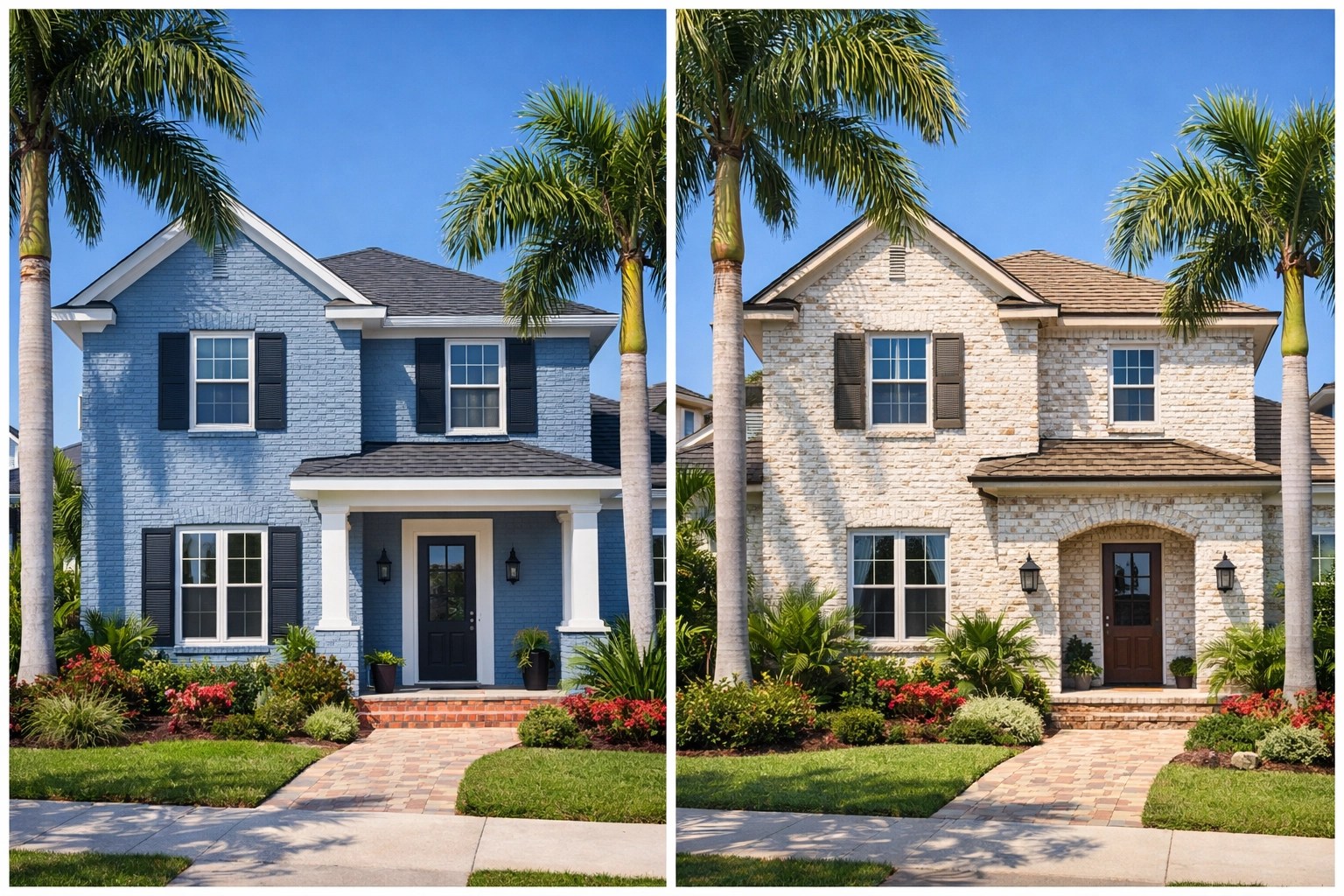
Limewash materials are relatively inexpensive, but the application can cost about 50% more than standard painting depending on the size of your project. Why? It requires specific techniques and sometimes multiple coats to get the right coverage and finish. Not every painter knows how to work with limewash properly (we do, but that's another story).
Exterior paint has a wider cost range depending on quality. Cheap paint will cost you more in the long run with frequent repaints. High-end masonry paint costs more upfront but lasts longer and performs better in Florida's climate.
Over a 10-year period, the costs tend to even out. The real question is: which one matches your aesthetic and lifestyle?
Which One Is Right for Your Stuart or Palm City Home?
Here's the honest breakdown:
Choose limewash if:
- You love the rustic, aged, European cottage look
- You want a breathable finish that handles Florida humidity naturally
- You're okay with the finish evolving and developing character over time
- You prefer low-chemical, natural products
- Your home has a coastal or historic vibe
Choose high-quality masonry paint if:
- You want a uniform, crisp finish that looks freshly painted for years
- You prefer a wide range of color options (limewash has a more limited palette)
- You need maximum durability in a high-traffic or high-exposure area
- You're not a fan of the weathered, chalky aesthetic
- You want the longest possible time between repaints
Both options work beautifully in coastal Florida when applied correctly. We've done stunning transformations with both limewash and paint in neighborhoods across Port St. Lucie, Stuart, Jensen Beach, and Palm City.
The "wrong" choice is picking a cheap product or cutting corners on prep work. In Florida's climate, that always ends badly.
The Bottom Line
There's no universal "better" option here. Limewash and exterior paint serve different purposes and create different looks. What matters is matching the right product to your home's style, your maintenance preferences, and how your specific brick reacts to Florida's coastal environment.
If you're standing in front of your brick home right now, still not sure which way to go, we get it. This isn't a decision you want to get wrong.
At CertaPro Painters of Port St. Lucie, we've transformed hundreds of brick homes across the Treasure Coast. We can walk you through samples, show you what each finish looks like on your actual brick, and explain exactly how each option will perform on your specific home.
Because the best choice isn't limewash or paint: it's the one that makes your coastal Florida home look exactly the way you've been picturing it.
Leave a Reply